
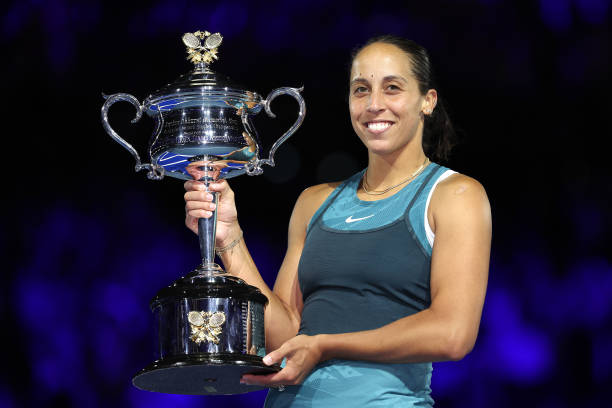
I wanted to publish a post on the magnificent streak Madison Keys just completed in Australia, going undefeated while winning two titles, including the Australian Open, her first major championship in a stellar tennis career that began 16 years ago.
But in the midst of Madison’s remarkable run at age 29, the Black tennis community lost a titan with the passing of Robert C. “Bob” Davis. Bob passed just a few weeks shy of his 81st birthday.
Bob was fundamental to the launch of this tennis blog, and I am deeply, deeply saddened by his sudden departure.
Bob was the first person I consulted with when I was considering writing a tennis blog for a Black audience, and he would have been the first person I would have contacted to discuss the significance of Madison’s victory on Black tennis history.
Bob would have appreciated the fact that Madison became the sixth Black player on the Women’s Tennis Association tour to win Grand Slam event, following Althea Gibson, Serena and Venus Williams, Sloane Stephens and Coco Gauff. He would have applauded Madison, while at the same time pointing out her reluctance to embrace that part of her DNA.
Bob also would have touted Taylor Townsend for winning the Australian Open doubles crown, her second major title in two years. And he would have saluted Ben Shelton for reaching the semifinals on the men’s side, going a step further than he did in his inaugural major tournament Down Under two years ago.
Those highlights would have been fodder for the Black Tennis History website Bob created years ago to preserve and promote the accomplishments of Black tennis players, coaches and patrons.
“He was a great historian,” said Edwin Amos, director of the junior tennis program for the Wolfe Park Tennis Association in Columbus, Ohio. “It’s a big loss.”
Amos and Bob served together for several years on the board of directors of the American Tennis Association, the Black tennis organization formed in 1916, when Blacks were barred from the United States Tennis and Lawn Association, now known as the United States Tennis Association.
Bob, a lifetime ATA member, and Amos shared a philosophy that young Black players need to be exposed to world-class training and competition to have success at the highest levels of the sport.
“We always gravitated towards each other from a like mindset about the direction the ATA was going,” Amos said. “To me, he was like an activist. He was somebody who brought common sense to thinking about Black tennis.”
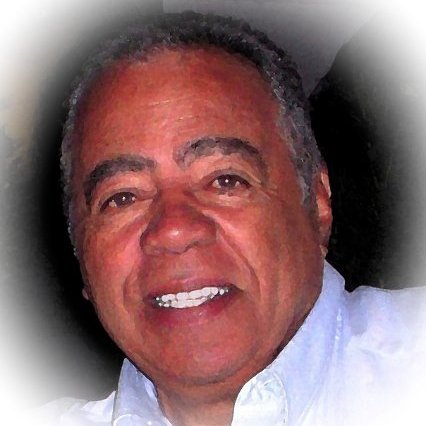
Historian, coach, player, promoter, Bob was all of that and more. He embodied the adage that tennis is a sport for a lifetime. He won the 80s division doubles title at the ATA national championships last July.
Bob devoted his life to tennis. He was as passionate about teaching as he was about playing and was deeply committed to doing for Black kids what the pros at Harlem’s Cosmopolitan Club had done for him when he was eight years old.
During the 1980s, Bob owned and operated his own tennis academy in the state of New York. He later collaborated with Arthur Ashe and the legendary Nick Bollettieri to create what became the Arthur Ashe Safe Passage Foundation.
As CEO, Bob helped introduce tennis to more than 20,000 inner-city kids in 10 cities, along with health screenings, tutoring and academic support. When the program folded after Ashe’s death in 1993, Bob created Black Dynamics, Inc., which offered talented minorities scholarships to the IMG Academy, then owned and operated by Bollettieri. Bob later created the Panda Foundation, Inc., that is modeled after Safe Passage.
“He took me to my first ATA tournament,” said Maurice Green, who added that he was a kid growing up in New York’s Hudson Valley when he met Bob while playing tennis at a local park. He said Bob was much sought after as a coach in the area.
“Every parent wanted their kid to be taught by Bob Davis,” Green said. “He was head coach at every tennis club in the area.”
Green said Bob became his instructor, mentor and lifelong friend. For the past several years, he said, he and Bob would talk daily until Bob’s health took a sudden turn for the worse not long after he won the ATA double title.
“I go from talking to this guy every day to not knowing what to say,” Green lamented. “It’s a crushing loss.”
I reached out to Tanya Lukowiak, one of Bob’s two surviving daughters, for some explanation of what had happened. She told me Bob contracted Covid during the tournament. Several weeks later, he was diagnosed with pneumonia. In November, he was diagnosed with stage-four lung cancer.
At Christmas, Bob was still walking around the house, she said, but he had not hit a tennis ball since winning the ATA tournament. Not being able to hit three or four times a week on his favorite court became unbearable for him, she said.
“A life without tennis was a life not worth living,” she said. In his final days, she added, he would be “sort of loopy on one day, super clear on another.”
A memorial service was held on Jan. 24 at GT Bray Park, where Bob played three or four times a week. “There were all ages of people who were touched or inspired” by Bob, in attendance, she said. On Feb. 26, the tennis court where he played will be dedicated in his honor.
Bob had an immense impact on many in and outside the Black tennis community who were fortunate enough to meet him.
“Bob Davis was one of the most extraordinary persons I have ever met,” said Dale Caldwell, founder of the Black Tennis Hall of Fame, in a statement on the organization’s website. “I will always be grateful to him for lending his tennis celebrity to serve as the first executive director and president of the Black Tennis Hall of Fame.”
A native of New York City, Bob learned his tennis at the Cosmopolitan Club in Harlem, along with his older brother, Wilbert “Billy” Davis, who also was a standout player. I published a post on Billy Davis in December of 2019.
Bob spent a good part of his junior days under the tutelage Dr. Robert “Whirlwind” Johnson, known as the Godfather of Black tennis, in Virginia. That is where he met Arthur Ashe, the only African American male to win a major title.
Among the more than 50 tennis championships Bob won as a player was the ATA National Junior title and the men’s doubles championship he won with his brother. Bob was a life member of the ATA and served on its board of directors for many years.
As a coach, Bob helped guide the 2014 Jamaican Davis Cup team in competition. He was a USPTR certified professional for 26 years. He was a five-time Hall of Famer, including a 2014 induction into the Black Tennis Hall of Fame.
Bob was always experimenting with ideas to teach tennis in clear and simple terms. In February 2024, I wrote about his latest creation, a series of 1-minute videos on the fundamental strokes of the game. The videos were posted on YouTube under the title, “Urban Aces Tennis Academy.”
Bob was proud of the success Black players are gaining on the professional tour and was encouraged about prospects for the future.
“The Black players, given the opportunity to train and compete at the top levels of the game, are proving to threaten the best players in the world, as many of us always knew that they would,” he told me after Coco Gauff won the 2023 US Open singles title.
For me, Bob was a guiding light and a sounding board. He opened my window to a deep, rich history of Black tennis that I had not known existed. I will forever cherish the knowledge and wisdom he abundantly shared. He was a big supporter of my blog, passing it on to others and always offering an encouraging note.
I never had the opportunity to meet Bob face-to-face. But my life was enriched by the conversations we had about Black tennis. I will truly miss him.
I’ll close with these words from Maurice Green: “I’ve always felt so privileged to have met Bob Davis. He’s one of those people that you’re very, very lucky to have met.”
###


A wonderful piece and informative tribute my friend! Wish I had met him as well!
Well done Larry!
Clem
Sent from my iPhone
LikeLike